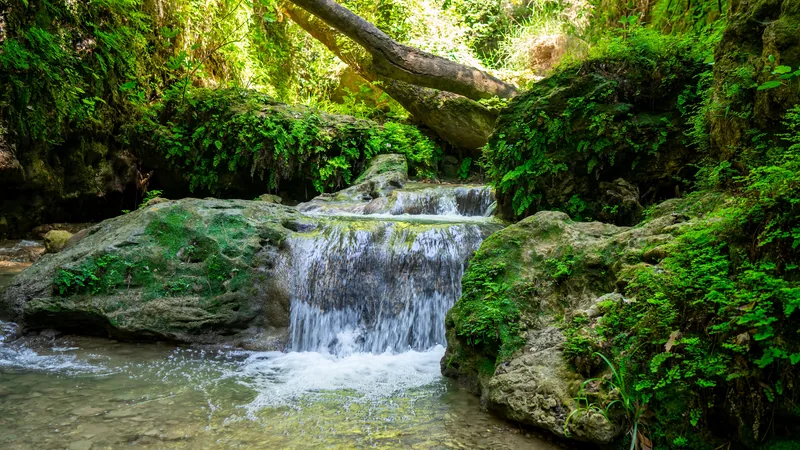
Half-day from Fethiye, Patara, Kalkan or Kaş. Water shoes essential. Combine with Tlos ancient city for a full day. Eat trout at the river-platform restaurants for lunch. Don’t do it in flip-flops.
Most first-timers turn up in flip-flops, freeze in the cold water within 50 metres, retreat to the walkway, take three photos, and leave. Don’t do that. Wade in proper water shoes (rent ₺50–80 at the gate if you didn’t bring any), bring a fleece for after, walk at least 1 km in past where most day-trippers turn around, and you’ll have something genuinely memorable. Combine with the half-day at Tlos and you’ve filled a perfect summer day from any western Lycia base.
What Saklıkent actually is
Saklıkent (“the hidden city”) is the deepest gorge in Turkey — 300 m at its tallest, 2 m wide at its narrowest. The Eşen river runs through it, fed by mountain springs that emerge near the top of the canyon at the famous “Yarcı” spring. Water temperature is 8–12°C year-round; flow rate varies dramatically by season — fast and high in spring snowmelt, knee-deep and manageable from mid-May, very low by September.
The first 300 metres of the canyon (from the entrance gate inward) has a raised wooden walkway built around 2000 — accessible to anyone in dry shoes, including pushchairs and wheelchairs. The walkway ends at the riverbed crossing, where most visitors turn around. Beyond the crossing, the gorge proper opens up: a near-vertical slot 50–80 m deep, the river running between you, occasional pools waist-deep where you’ll need to ford. The current is real — older travellers and small children should not go past the crossing without help.
How to actually visit — the practical detail
Entry, hours, parking
Single gate at the entrance, ₺100 (~£2.50/€3) per person. Open 9am–7pm in summer (June–September), 9am–5pm shoulder-season. Free parking. Children under 7 are free. The MüzeKart Plus annual pass does NOT cover Saklıkent — it’s a separate ticket system.
What to wear
Water shoes (rent at the entrance for ₺50–80 if you didn’t bring any) or sturdy sandals with grip — Tevas, Keens, or Salomon Techamphibians are the right tier. Crocs work but slip on slick limestone. Quick-dry shorts (you’ll be wet to the waist). Light long-sleeve shirt for sun protection on the walk in. NOT cotton — it stays cold and clings. Dry bag for phone/camera. Fleece for after — even in 35°C summer the cold water leaves you genuinely chilled.
How far to walk
The first 300 m walkway suits everyone. The first 500 m of wading is comfortable for most adults. 1 km in is where the gorge feels properly wild — narrow walls, occasional pools where you swim a stroke or two, fewer other visitors. 2 km in starts to require some scrambling. Beyond ~3 km is technical canyoning territory and not recommended without a guide and rope. Most foreign visitors turn around at 500m–1km; staying out there 1.5–2 hours is enough for the full Saklıkent experience.
The trout restaurants — Saklıkent’s culinary subspecies
Just below the gorge entrance, twelve family-run restaurants are built on wooden platforms over and beside the river — the cold mountain water rushes literally beneath your feet as you eat. Most serve a near-identical menu: grilled mountain trout (alabalık) sourced from the gorge fish farms, salad, bread, lemon, served at low platforms where you sit on cushions cross-legged. ₺200–300 (~£5–7) for a full trout meal with sides; cold beer ₺50–80.
The trout are farmed locally in cold-water tanks fed from the gorge. The menu doesn’t vary much restaurant-to-restaurant; pick whichever has free table space and looks well-shaded. Quality is reliably good across the lot. Can be busy 12–2pm in peak season — go early (11am) or after the gorge walk (3pm).
Combine with what
Tlos ancient city — 30 minutes drive east
Tlos is one of the six largest cities of ancient Lycia, occupying a dramatic hilltop site with 360° views over the Xanthos valley. Major surviving structures: a Roman theatre with surviving stage building, a cluster of carved Lycian rock tombs in a cliff face (including the famous “Bellerophon Tomb” with reliefs of the Pegasus rider), a Byzantine fortress on the summit, an extensive necropolis. Not crowded — most coach tours skip it. Easy 1.5–2 hour visit. Combines naturally with Saklıkent on the same half-day. See sites directory.
Yakapark trout pools — 5 minutes drive
An old Roman cistern complex turned into a series of cascading pools that double as a fish farm and outdoor restaurant. Smaller version of the gorge experience for families with toddlers — kids paddle in shallow pools, parents eat trout at a riverside table. Fine but a bit kitsch. Combine with Saklıkent on a full day if you have under-7s.
Kayaköy ghost village — 40 minutes back toward Fethiye
If you’re heading back to Fethiye via the inland route, the abandoned village of Kayaköy makes a 90-minute side trip. ~500 stone houses and 2 churches, depopulated when the Greek-Orthodox population was exchanged with Turkey’s Muslim population from Greece in 1923, never resettled. Surprisingly affecting site. Combines well with a short walk from Kayaköy down to Ölüdeniz on the Lycian Way (Stage 1 alternate).
Patara — combine on the same day from Kalkan
From a Kalkan or Patara base, a half-day Saklıkent + half-day Patara beach works. Saklıkent in the cool morning, Patara beach in the hot afternoon (or vice-versa). The gorge cools you down before the beach heat; the beach lets you wash off the gorge-water sediment.
How to get there
By private transfer or rental car
Easiest. Pre-book a half-day transfer from Fethiye (€60–90 round-trip incl. waiting), Kalkan (€50–70), Kaş (€80–120), Patara (€60–80). With a rental car: D400 coastal road south from Fethiye, turn inland at the Saklıkent signs in Kınık village, follow signs through Eşen to the gorge entrance. Free parking. See operators.
By dolmuş
From Fethiye otogar a direct dolmuş runs to Saklıkent in season (June–September), 4–5 departures a day, ₺50–80 each way (~£1.50–2.50). Slow (1 hour 15 min including stops) but cheap. Last return service is around 5pm — don’t miss it. From Kalkan or Kaş the dolmuş requires a transfer at Eşen junction; doable but adds an hour each way.
By organised tour
Half-day and full-day organised Saklıkent tours run from every western-Lycia base. Most pair the gorge with Tlos and a trout lunch and cost €25–45 per person including transport, entry, and lunch. The cheap aggregator versions herd 20+ people through in 90 minutes — read reviews and pick a small-group operator. See operator listings.
When to visit
Mid-May to mid-June: ideal. Snowmelt is subsiding so the river is wadeable but still vigorous. Air temperatures 25–30°C — hot enough to want the cold water, not so hot that the wait at the entrance is uncomfortable. Crowds are manageable.
July–August: peak season. Hot air (35–40°C) makes the cold water exquisite. Crowds peak at midday — go early (gates open 9am). Trout restaurants busy 12–2pm.
September: water levels lowest of the year, easy wading even for less-confident walkers. Air still warm. Excellent month.
October: last 2–3 weeks the air starts cooling and you’ll be cold after. Earlier in the month is fine.
November–April: the wading section closes (dates depend on winter rainfall). The walkway-only winter ticket is a quiet but limited experience.
What’s overhyped at Saklıkent
The mud bath
A small clay pit just inside the entrance is sometimes promoted as a “mineral mud bath.” It’s a muddy puddle. Skip it; the actual gorge wading is the experience.
The “ostriches” / random caged animals
Some of the trout-restaurant clusters keep ostriches, peacocks, ducks in small pens as a draw. Animal-welfare conditions are typically poor. Don’t reward the practice with attention; skip these stalls.
The deep-canyon “adventure” tours
Some tour brokers advertise “canyoning” expeditions deep into the gorge. Genuine canyoning at Saklıkent does exist but requires technical gear (wetsuits, ropes, helmets) and certified guides — and is rarely what gets sold under that label to day-trippers. If you want serious canyoning in Lycia, pre-book with a certified outdoor operator, not a beachfront booth in Fethiye.
Frequently asked
Where is Saklıkent Gorge?
Saklıkent Gorge is in the Akdağ mountains of Muğla province, 50 km southeast of Fethiye and 35 km north of Kalkan. The site is a Turkish national park. Drive time: 1 hour from Fethiye, 50 minutes from Kalkan, 1.5 hours from Kaş, 2 hours from Olympos. Dolmuş services run from Fethiye otogar in season.
How long is the gorge and how far can you walk?
The full canyon is 18 km long but only the first 4 km is open to public access. The first ~300 metres has a raised wooden walkway over the deepest water. Beyond that you wade in the riverbed itself — water is knee-to-waist deep, fast-flowing, and bone-cold (8–12°C year-round). Most visitors walk 500m–1km in. Confident scramblers reach 2–3 km. Beyond that requires technical canyoning gear and a guide.
How much is entry?
₺100 / ~£2.50 / ~€3 per person, paid at the gate. Open 9am–7pm in summer (June–September), 9am–5pm in winter. Children under 7 are free. Parking is included. The MüzeKart Plus annual pass does NOT cover Saklıkent — it’s a separate ticket.
What should I wear into the gorge?
Water shoes (rentable at the entrance for ₺50–80) or sturdy sandals with grip — flip-flops will fall off in fast water and slippery rock. Quick-dry shorts (you’ll be wet to the waist). A light long-sleeve shirt for sun protection on the walk in. Do NOT wear cotton. Pack a dry bag for phone/camera. Even in 35°C summer heat, bring a fleece for after.
Is Saklıkent good for kids?
Yes — but with caveats. The first 300m of wooden walkway is suitable for confident walkers age 5+. The wading section beyond is harder: water is fast, cold, and the riverbed is uneven cobble. Children under 8 should be carried at the deeper crossings or stay on the walkway. The trout restaurants on platforms over the river are a hit with kids. Saklıkent is one of the better family-day-trip choices in Lycia for active 7–12s. See full family guide.
Is the gorge open year-round?
No. The wading section closes from approximately mid-November to mid-April when winter rains and snowmelt make water levels too high and currents dangerous. The wooden walkway sometimes stays open in winter for ₺50 reduced entry, but the gorge proper is genuinely impassable in flood. Best months: late May, June–September, early October.